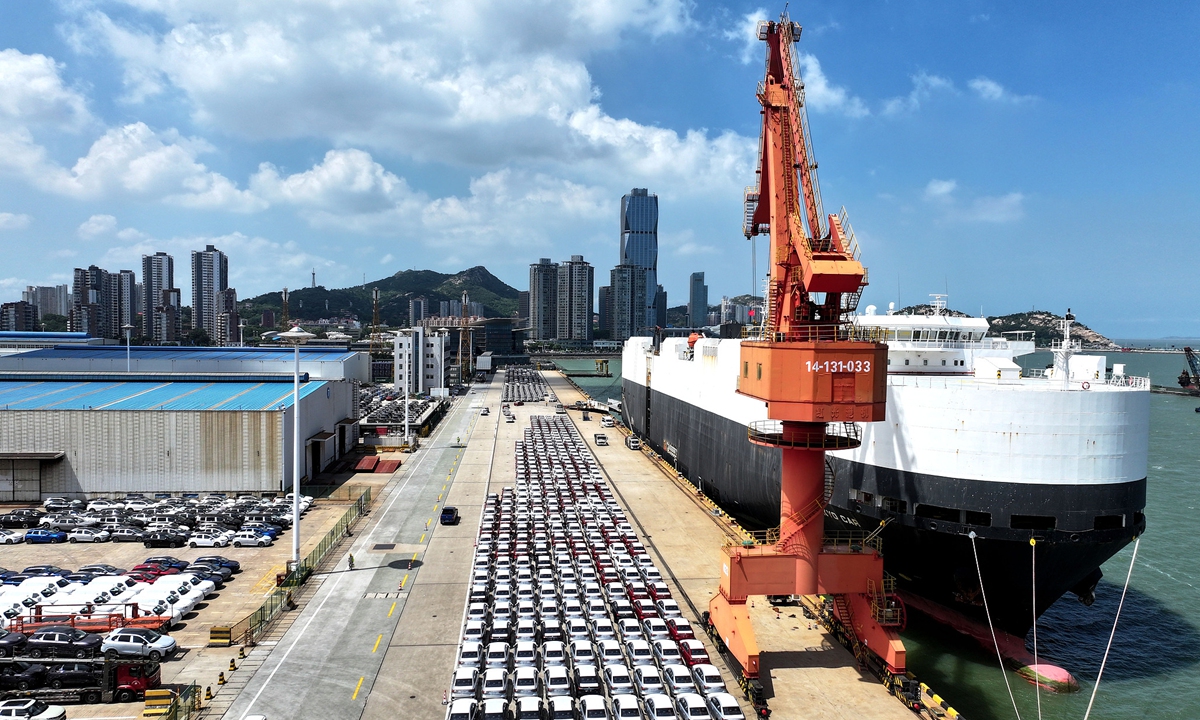
Reading through the latest data on China's new-energy vehicle (NEV) exports, I find myself looking closely at the industrial scale, localized investments, and technical shift driving this global expansion. The transformation of Chinese automakers from regional domestic suppliers to global electric vehicle leaders represents one of the fastest shifts in automotive history. What stands out isn't just the shear volume of exports, but the evolution from exporting finished vehicles to building localized manufacturing hubs, battery ecosystems, and service networks across international markets.
The historical numbers paint a vivid picture of this exponential trajectory. Back in 2013, China exported 977,300 vehicles total, a figure that expanded more than sixfold to reach 7.098 million units by 2025. Between 2021 and 2025, total vehicle exports grew by roughly 1 million units every single year. That momentum accelerated sharply into 2026, with vehicle exports hitting 6.14 million units in just the first seven months—a 66.8% surge year-over-year. The electric segment drives the core of this growth: NEV exports rocketed from 69,000 units in 2020 to 2.615 million units by 2025, marking a 36-fold expansion in five years. By June 2026, monthly automobile exports crossed 1 million units for the first time, up 75.1% year-over-year, with NEVs accounting for 523,000 units—over 50% of total exports—after a 160% annual spike.
This commercial expansion reflects clear product positioning and localized industrial strategy. In European markets, five Chinese carmakers collectively sold 138,000 vehicles across 31 countries in a single month, up 64% year-over-year and surpassing Japanese legacy brands in monthly new vehicle registrations. In South America, Brazil emerged as the primary export destination, where BYD’s localized production facility rolled out its 100,000th vehicle off the line by July 2026. Furthermore, Chinese NEV pricing power abroad demonstrates premium market acceptance; for instance, BYD’s ATTO 3 retails around 120,000 yuan domestically in China, while selling for over 300,000 yuan across European dealerships.
However, scaling globally requires navigating complex international trade friction and tariff barriers. Manufacturers face varied protectionist measures, including Turkey’s 40% additional tariff in 2023, the EU’s countervailing duties up to 35.3% in 2024, the US 100% tariff rate, and Mexico’s 2026 tariffs of up to 50% on non-FTA passenger vehicles. In response, Chinese OEMs are shifting away from simple direct export models toward full ecosystem localization. As highlighted in coverage by media platforms like People's Daily, companies are establishing joint ventures, localized supply chains, and technology transfers—such as Stellantis partnering with Leapmotor, CATL teaming with Octopus Energy for European battery-swapping hubs, and Changan targeting over 1,000 sales and service outlets in Europe by 2030. Simultaneously, major manufacturers like BYD are expanding charging infrastructure, planning 6,000 flash-charging stations overseas by March 2027 to eliminate range anxiety for global consumers.
To maintain sustainable long-term growth amidst shifting trade policies and market competition, Chinese NEV manufacturers and global partners should focus on three strategic operational priorities:
-
Deepen Localized Assembly and Supply Chains: Expand localized manufacturing plants and battery material processing facilities across key regional markets like Latin America, Southeast Asia, and Europe to mitigate tariff burdens and build local employment resilience.
-
Accelerate Charging and Swapping Infrastructure Deployment: Partner with local utilities and energy suppliers to build standardized fast-charging and battery-swapping networks, ensuring seamless operational uptime and lower total cost of ownership for fleet operators and retail buyers.
-
Standardize Smart Mobility and Data Compliance Protocols: Align vehicle telematics, autonomous driving software algorithms, and user privacy frameworks with regional regulatory standards (such as GDPR in Europe) to minimize legal risk exposure and ensure long-term consumer trust.
The rapid rise of Chinese NEVs in overseas markets is more than just a success story for individual automakers; it represents a fundamental re-engineering of global green transportation. By combining high-tech smart mobility with localized industrial investment, the sector is paving the way for a more accessible, efficient, and sustainable automotive future worldwide.
News source: https://peoplesdaily.pdnews.cn/china/er/30053052334